

Geckos are small, mostly carnivorous lizards that have a wide distribution, found on every continent except Antarctica. Belonging to the infraorder Gekkota, geckos are found in warm climates throughout the world.
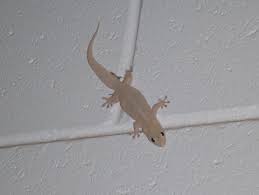
Mediterranean house gecko (Hemidactylus turcicus ) is a species of house gecko common to the Mediterranean area which has spread to many parts of the world. The commonly known house gecko is commonly referred to as the Turkish gecko as represented in its Latin name and some people also called it the Moon Lizard because it emerges in the evening.
AN INCREDIBLE CHARACTER OF GECKO
They are known for their unique ability to cling to surfaces and walk on walls and ceilings due to their specialized toe pads that can adhere to surfaces. They are also known for their colorful markings and patterns, and their ability to shed their tails as a defense mechanism. Geckos are typically small, ranging from a few centimeters to around 30 centimeters in length, and are popular pets due to their unique characteristics and ease of care.
DO YOU KNOW? WHAT MAKES GECKO WALK ON A SMOOTH SURFACE
Geckos are able to walk on smooth surfaces due to their special feet. Their feet are covered with millions of tiny hairs called setae, which are further divided into even smaller structures called spatulae. These fine structures help geckos to create strong and temporary intermolecular forces known as van der Waals forces that allow them to climb and stick onto surfaces.Van der Waals forces are due to the attraction between charges on molecules. The van der Waals interaction force between two molecules is proportional to the inverse sixth power of the distance between them. When geckos’ feet are pressed against surfaces, the tips of their tiny spatulae create a large surface area which allows them to generate millions of van der Waals forces. These forces allow geckos to stick to smooth surfaces such as glass, walls, and even upside down on ceilings.
THE REASON BEHIND GECKO SOUND
Geckos often produces sound with respect to:
- Bonding,
- Territorial claim
- Social communication
- Distress
- Warning
- Defense
ADDITIONAL REASON FOR GECKO SOUND
These sounds sometimes may be heard during:
- Mating
- Copulation, and
- Navigation.
Gecko vocalizations differ in terms of the number of sounds, duration, tone, and frequency.
Watch video below


